
The Power of Connection: How Emotionally Focused Couples Therapy (EFCT) Works

Relationships are among the most significant sources of comfort in our lives, but they can also be among the most significant sources of stress. When communication breaks down, when conflict becomes the default pattern, or when partners start to feel distant or unseen, even a previously strong bond can begin to feel shaky.
The good news? Struggles in relationships are everyday, understandable, and changeable.
Emotionally Focused Couples Therapy (EFT or EFCT) is one of the most effective therapeutic approaches for helping couples reconnect. Backed by decades of research and grounded in attachment science, EFT helps partners understand the emotional patterns that keep them stuck and teaches them how to build a more secure and responsive bond. This article helps you to understand how emotionally focused couples therapy (EFT/EFCT) works.
For couples across Ontario, including those in Thunder Bay and Northwestern Ontario seeking couples counselling, this approach offers a compassionate and practical way forward.
Why Connection Matters in Couples Therapy
At Kindful Psychology Services, we often remind clients of a simple truth: Humans are wired for connection. Feeling safe and emotionally supported is essential for healthy relationships.
This isn’t just a comforting idea; it is backed by decades of attachment research from psychologists like Dr. John Bowlby and Dr. Sue Johnson.
Studies consistently show that:
Secure emotional bonds predict stronger relationship satisfaction.
When couples feel emotionally connected, communication improves naturally.
Couples who experience emotional responsiveness from one another recover from conflict more quickly.
EFT is built around this science. Instead of focusing only on communication skills or problem-solving, EFT looks deeper, at the emotional patterns beneath the surface.
What Is Emotionally Focused Couples Therapy (EFCT)?
Emotionally Focused Couples Therapy is a structured, therapeutic approach developed by Dr. Sue Johnson. It focuses on strengthening the emotional bond between partners by identifying negative interaction cycles and creating new ways of connecting.
EFT is one of the most widely researched forms of couples therapy. In fact:
A landmark study published in the Journal of Consulting and Clinical Psychology found that 70–75% of couples move from distress to recovery through EFT, and
90% show significant improvement in their relationship.
These numbers are extreme in the field of psychotherapy, which is one reason why EFT has become a leading approach worldwide.
How Emotionally Focused Couples Therapy (EFCT) Works: A Simple Explanation
EFT helps partners:
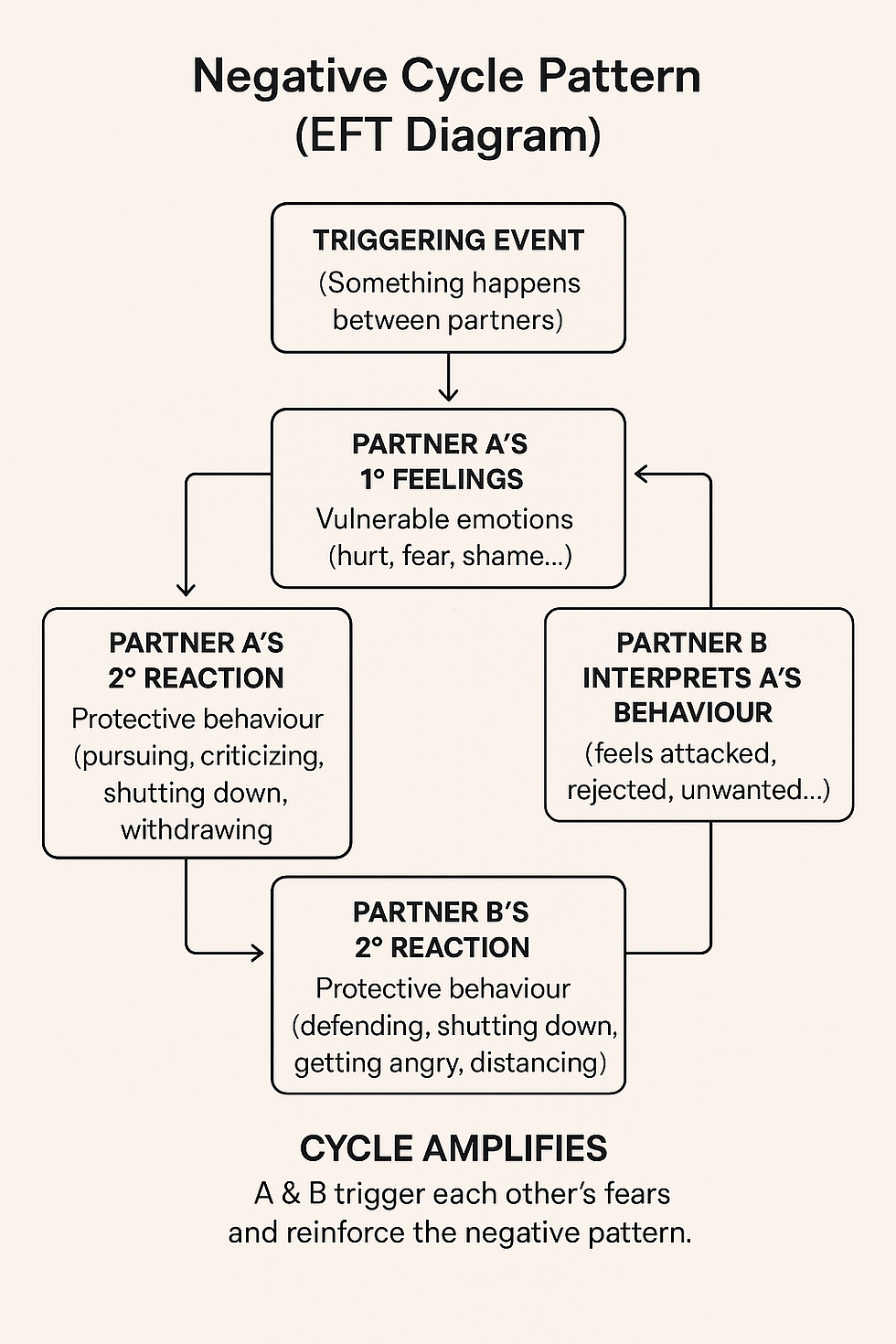
Understand The Negative Emotional Cycle They Are Stuck In
Every couple has a “cycle”, a predictable pattern that appears during stress or conflict. For example:
One partner withdraws
The other pushes harder
Both feel unheard
Identify the Deeper Emotions Beneath the Surface Reactions
Often, anger hides fear.
Criticism hides loneliness.
Withdrawal hides overwhelm.
Learn How To Communicate These Emotions In A Softer, More Connected Way
Rebuild a secure emotional bond where both partners feel valued, supported, and understood. EFT doesn’t assign blame. It doesn’t pathologise. Instead, it brings compassion to the emotional needs we all carry.
Why EFCT Works for So Many Couples
Many forms of couples therapy focus primarily on communication skills. While communication is essential, EFT recognizes that couples cannot communicate effectively when they feel unsafe or disconnected.
Here are several reasons why EFT feels different, and often more transformative:
1. EFCT Helps You Understand Negative Cycles, Not Just Symptoms
Conflict is rarely about the topic itself. It’s about deeper emotional signals:
“Do you care?”
“Do I matter to you?”
“Are you there for me?”
“Do you see what I’m going through?”
EFT helps couples understand the patterns underneath the surface conflicts.
2. EFCT Creates Safety for Both Partners
EFT therapists help partners slow down, speak gently, and really listen, often for the first time in a long while. This sense of emotional safety allows for deeper conversations.
3. EFCT Uses Compassion, Not Criticism
Many couples say EFT feels less intimidating because it is collaborative, respectful, and focused on bonding rather than blame.
4. EFCT Is Evidence-Based
Research shows EFT leads to:
Greater emotional closeness
Long-term relationship stability
Improvements in depression and anxiety
Better conflict recovery skills
In fact, neuroimaging studies (e.g., Johnson et al., 2013) found that couples undergoing EFT showed changes in brain activity related to emotional regulation and attachment safety.
5. EFCT Works for All Types of Couples
EFT supports couples navigating:
Communication problems
High conflict
Emotional distance
Affairs
Life transitions
Parenting stress
Trauma histories
Neurodivergence
Mental health challenges (anxiety, depression, PTSD)
Because EFT is trauma-informed and deeply compassionate, it is well-suited for couples where one or both partners have experienced early attachment wounds or stressful life experiences.
What Does an EFCT Session Look Like?
Here’s what you can expect when you begin Emotionally Focused Couples Therapy at Kindful Psychology Services:
1. The Assessment Phase
Your therapist meets with both partners together and then individually. This helps the therapist understand:
Your relationship strengths
Your main concerns
Key stressors
Your communication patterns
Your attachment styles
This stage ensures the therapy is personalized and sensitive to your needs.
2. The Cycle Work Phase
Together, you begin exploring your relationship’s “negative cycle.”
Common cycles include:
Pursue–Withdraw Pattern
Blame–Defend Pattern
Shut Down–Escalate Pattern
Your therapist will help you slow these moments down and understand the emotion beneath each partner’s reactions.
3. Rebuilding Connection
This stage is where transformation happens. Couples begin practising new emotional interactions, including:
Sharing softer feelings
Asking for reassurance
Responding with empathy
Repairing conflict more gently
Reinforcing trust and closeness
Many couples describe this phase as the moment they finally “see each other clearly again.”

How EFCT Supports Mental Health and Individual Well-Being
Couples therapy isn’t just for people having relationship problems. A stronger emotional bond can also benefit mental health.
Reduce symptoms of depression and anxiety
Improve emotional resilience
Protect against burnout
Enhance self-esteem
Promote a sense of security and belonging
At Kindful Psychology Services, where self-compassion, mindfulness, and trauma-informed care guide our work, EFT fits naturally into our broader therapeutic philosophy.
Couples therapy becomes not just a relationship intervention, but a personal growth journey.
When Should a Couple Seek EFCT?
You don’t need to wait for a crisis. Many couples start EFT when they notice:
Feeling more like roommates than partners
Recurring arguments about the same topics
Emotional distance or loneliness
Parenting or life stress is taking a toll
Feeling misunderstood or dismissed
Trouble recovering after conflict
Struggles balancing neurodivergence and relationship needs
A desire to reconnect after trauma or burnout
Early support can prevent deeper patterns from forming.
Why Choose Kindful Psychology Services for Couples Therapy?
Couples across Ontario, including clients in Thunder Bay and Northwestern Ontario, work with us because our approach is:
Compassionate, we recognize that all emotions are valid
Trauma-informed, safety comes first, always
Mindfulness-based, helping couples stay grounded in the moment
Research-supported EFCT and Gottman methods are evidence-based
Inclusive, we welcome neurodivergent, LGBTQ+, and culturally diverse couples
Holistic, focusing on emotional connection, not just conflict management
Our couples therapy clinicians have advanced training in EFCT, including the EFCT Externship and Core Skills EFCT Levels 1-4. And because we also provide individual therapy, self-compassion programs, EMDR, CBT, and psychological assessments, our team can support you as a couple and as individuals.
How to Get the Most Out of EFCT
Here are practical tips to help couples deepen the work between sessions:
1. Practise Self-Compassion
Couples often blame themselves for relationship patterns. Instead, try:
Being gentle with yourself
Recognizing that conflict is normal
Viewing struggles as signals, not failures
Self-compassion can lower emotional reactivity, making it easier to engage in healthier conversations.
2. Slow Down During Conflict
Notice when your heart rate increases or when you feel overwhelmed. Pause before reacting.
3. Stay Curious About Your Partner
Ask open-ended questions like:
“What’s going on for you right now?”
“What are you feeling underneath this?”
Curiosity builds understanding.
4. Attend Sessions Consistently
EFT is most effective when couples commit to regular sessions and practise what they learn.
5. Remember Change Happens Gradually
Relationships heal one moment of connection at a time.
Connection Is the Heart of a Strong Relationship
Emotionally Focused Couples Therapy offers a gentle, effective, and research-backed way to rebuild closeness and create lasting change. Whether you’re navigating conflict, experiencing emotional distance, or simply wanting a stronger bond, EFT can help you understand each other more deeply and reconnect in meaningful ways.
If you’re ready to explore couples therapy with a compassionate, trauma-informed clinician, Kindful Psychology Services is here to support you, wherever you live in Ontario.
Rebuilding a connection starts with one step. Learn more or book an appointment today at www.kindfulpsych.com.
Our team is here to help you strengthen your relationship, improve communication, and feel more secure together.
Comments